
Two Traditions,
One Room
The story of Kissa Kissa lives at the intersection of two parallel histories: the jazz kissa tradition born in 1920s Japan and the jazz heritage of Brooklyn’s Crown Heights neighborhood. Here’s how those threads come together on Franklin Avenue.
The Jazz Kissa: A Japanese Ritual
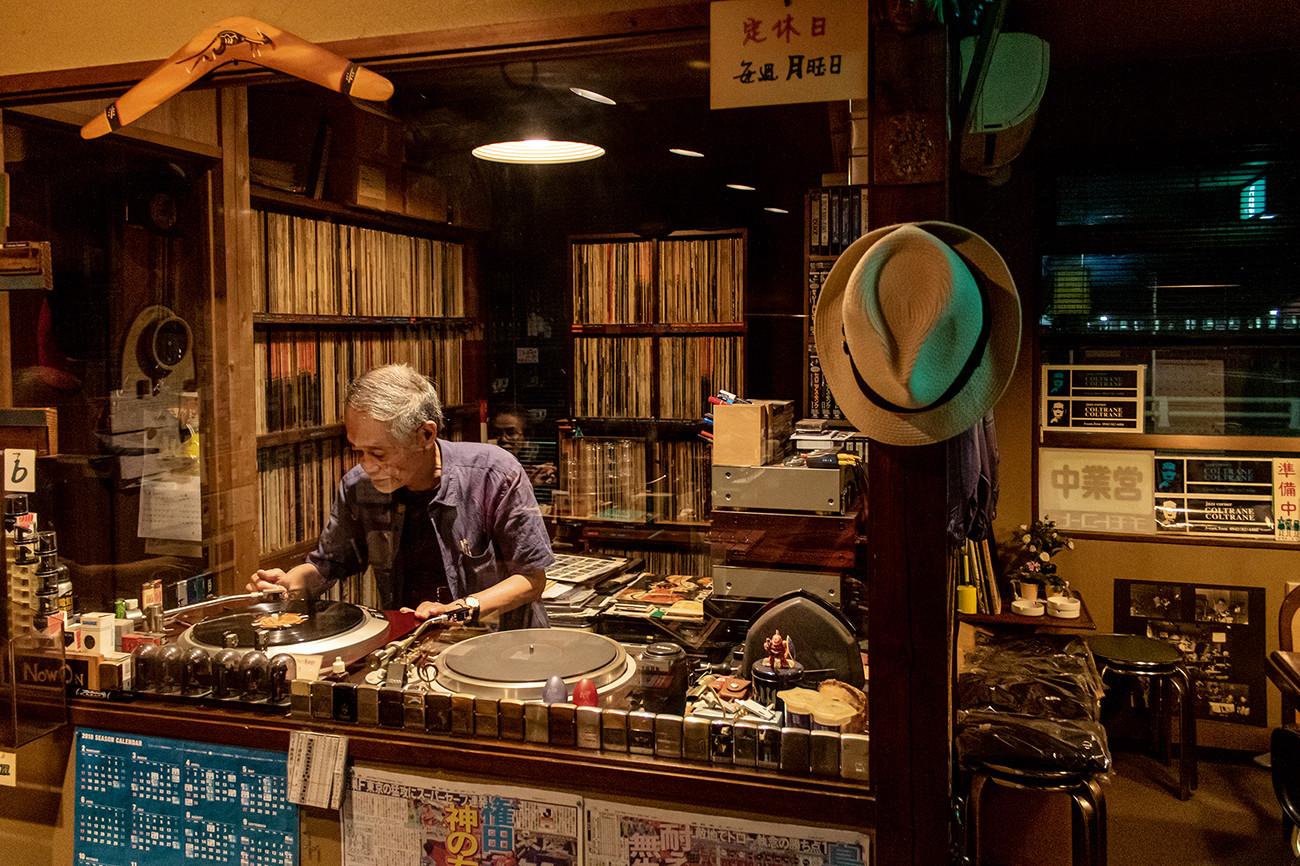
A jazz kissa (ジャズ喫茶) is a cafe or bar where jazz records are played on high-fidelity sound systems for dedicated, communal listening. Born in prewar Tokyo and reaching its peak in the 1960s and ’70s, the kissa tradition turned the simple act of listening into something sacred — a space where strangers became a community, united by a shared reverence for the music.
Origins in Prewar Tokyo
Japan’s first kissaten — traditional coffee houses — numbered over 10,000 by the mid-1930s. The first jazz kissa, a venue called Black Bird, is believed to have opened in 1929 near the University of Tokyo, playing Ethel Waters and Duke Ellington on 78 rpm records. By the late 1930s, roughly 80 jazz kissas operated across Japan, most of them in Tokyo. The proprietors — known as “masters” — curated their collections and served as educators, introducing patrons to new artists and movements.
Destruction and Rebirth
During World War II, jazz and other forms of American culture were banned. Many kissas shuttered. Tokyo’s devastating 1945 firebombing destroyed most of the venues that remained, along with their irreplaceable record collections. But after the war ended, the tradition rose from the ashes. American servicemen stationed near Tokyo brought records from the States, and a new generation of kissas emerged to fill a crucial role: in a country where imported LPs cost roughly 15% of the average worker’s monthly salary, the jazz kissa became one of the only places ordinary people could hear the latest music.
The Golden Age
The kissa renaissance went into high gear after Art Blakey and the Jazz Messengers’ “Moanin'” became an unlikely sensation in Japan, followed by Blakey’s celebrated 1961 tour. Through the 1960s, kissa proprietors played entire album sides, gave in-depth introductions before dropping the needle, and some patrons took notes. University students drawn to the cafes’ bohemian atmosphere made up a significant portion of the audience. By the mid-1970s, approximately 600 jazz kissas were operating across Japan — with roughly 200 in Tokyo alone.
Decline and Endurance
As records and stereo equipment became more affordable in the 1970s and ’80s, and live jazz performances expanded, the kissa’s original raison d’être began to fade. Numbers declined steadily. But the tradition never disappeared. Today, around 100 jazz kissas still operate in the Tokyo area, roughly 20 of which have been in continuous business since the 1960s and ’70s. New kissas continue to open, and the phenomenon has inspired a global wave of listening bars from London to Los Angeles — though few adhere to the strict all-jazz, all-vinyl, listening-first format of the originals.
Jazz in Brooklyn & Crown Heights
While jazz kissas were taking root thousands of miles away in Tokyo, Brooklyn was building its own vibrant jazz scene — one that, in the mid-1950s, rivaled and by some accounts surpassed Manhattan’s.
Brooklyn’s Jazz Heyday
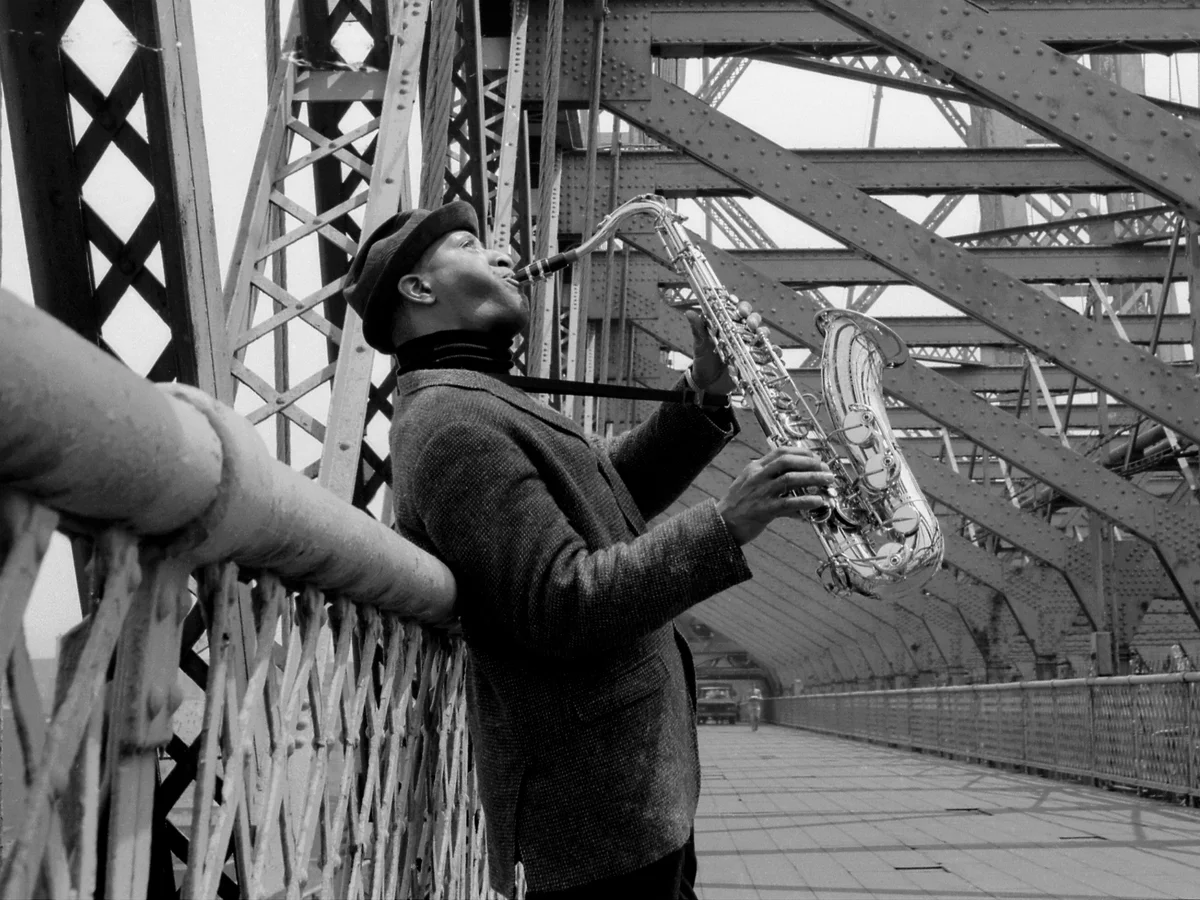
In the 1950s and early ’60s, Brooklyn’s central neighborhoods — Crown Heights, Bedford-Stuyvesant, Clinton Hill, and Fort Greene — teemed with jazz. The Blue Coronet on Fulton Street brought in Thelonious Monk, Miles Davis, Max Roach, and other giants. Tony’s Grand Dean, a small Black-owned club at Grand Avenue and Dean Street, became a beloved haunt where Monk would play despite having his Manhattan cabaret license revoked. One Brooklyn jazz historian has documented at least 24 jazz clubs operating in the borough during this era. Jazz legend Randy Weston, born and raised in Brooklyn, described the borough as central to the music’s development — a community of listeners, musicians, and scene-makers who gathered in clubs, living rooms, and neighborhood bars to experience the music together.
Crown Heights at the Center
Crown Heights itself was home to several jazz venues during the 1950s and ’60s, including The Continental, La Marchal, Baby Grand, Tip Top, Muse, and The Cornet. The neighborhood’s large African American community sustained a rich cultural ecosystem — record shops, social clubs, and gathering spots where jazz was the connective tissue. The same group of Brooklyn jazz hipsters that Fab Five Freddy’s father belonged to — men who would gather to play chess, discuss politics, and spin jazz records — embodied a spirit of communal listening that bears a striking resemblance to the kissa tradition developing simultaneously in Japan.
— Jimmy Morton, Brooklyn jazz MC and historian
The Quiet Years
By the mid-1960s, Brooklyn’s jazz club scene had largely receded. Economic shifts, changing tastes, and the challenges facing urban communities across the city took their toll. The venues closed, the marquees went dark, and for decades the neighborhood’s jazz heritage existed mostly in memory — kept alive by musicians, historians, and organizations like the Central Brooklyn Jazz Consortium, which worked to bring jazz back to its Brooklyn roots.
A New Chapter
In recent years, Brooklyn has experienced a renaissance in listening culture. Venues like Public Records in Gowanus, BierWax in Prospect Heights, and Eavesdrop in Greenpoint have made the borough a national epicenter for the listening bar movement. But among this new wave, one space on Franklin Avenue stands apart — not just for what it plays, but for the tradition it carries forward.
Two Histories, Side by Side
The parallel stories of jazz kissa culture in Japan and jazz in Brooklyn — and the moment they converge.
Where Two Traditions Meet
When you plot 667 Franklin Avenue on a map alongside Crown Heights’ historic jazz clubs — The Continental, La Marchal, Baby Grand, Tip Top, Muse, The Cornet — Kissa Kissa sits right in the center. It isn’t a coincidence. It’s a destination.
The Music
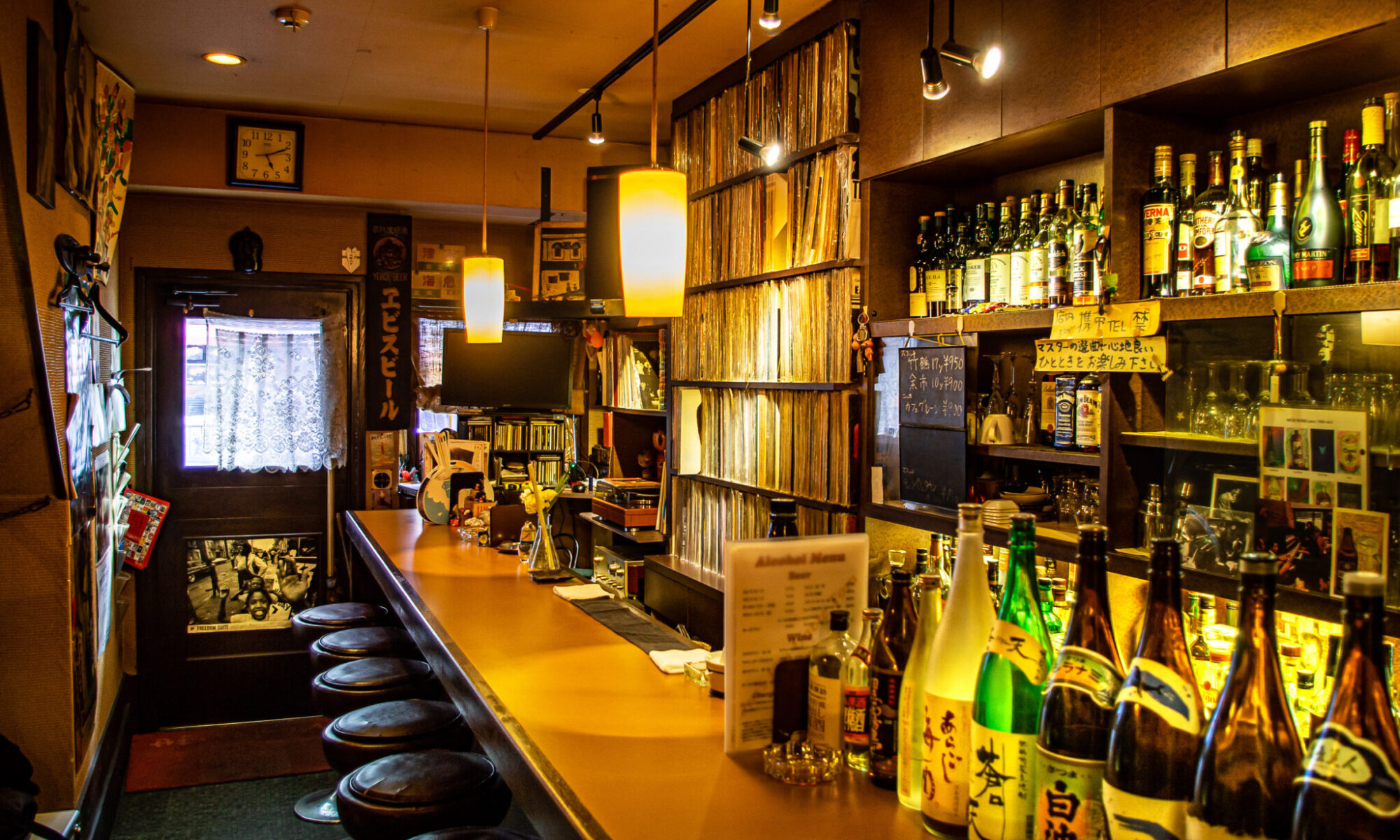
Like the jazz kissas of Tokyo, Kissa Kissa plays exclusively jazz — spanning bop, hard bop, soul jazz, bossa nova, modal, spiritual, Latin, and more. Every record is selected with intention, every evening a unique journey through the genre.
The Vinyl
Over 5,000 LPs, many of them Japanese pressings, fill the wall behind the bar. Like the kissa masters of old, Danny has individually purchased every record in the collection — a library built over years of crate-digging and personal curation.
The Community
In the 1950s, Brooklyn jazz fans gathered in neighborhood clubs to listen together. In postwar Tokyo, kissa patrons sat shoulder to shoulder, learning the music as a community. At Kissa Kissa, that same spirit lives on — a place for everyone, no expertise required.
Kissa Kissa is not a replica of a Japanese jazz kissa. It’s something new — a space that draws equally from the listening culture of postwar Tokyo and the jazz heritage of its own neighborhood. The result is a bar that feels both timeless and entirely of this moment: the first traditional jazz kissa outside of Japan, planted in the historic jazz soil of Crown Heights, Brooklyn.