
Somewhere in the back streets of Shibuya, behind a narrow door and down a flight of worn wooden stairs, a man lowers a needle onto a Blue Note pressing from 1962. The room holds maybe fifteen people. Nobody is talking. The only sound is Art Blakey’s drums filling every corner of a room designed — acoustically, spiritually — for exactly this moment. This is a jazz kissa, and for nearly a century, these spaces have been the beating heart of Japan’s love affair with American jazz.
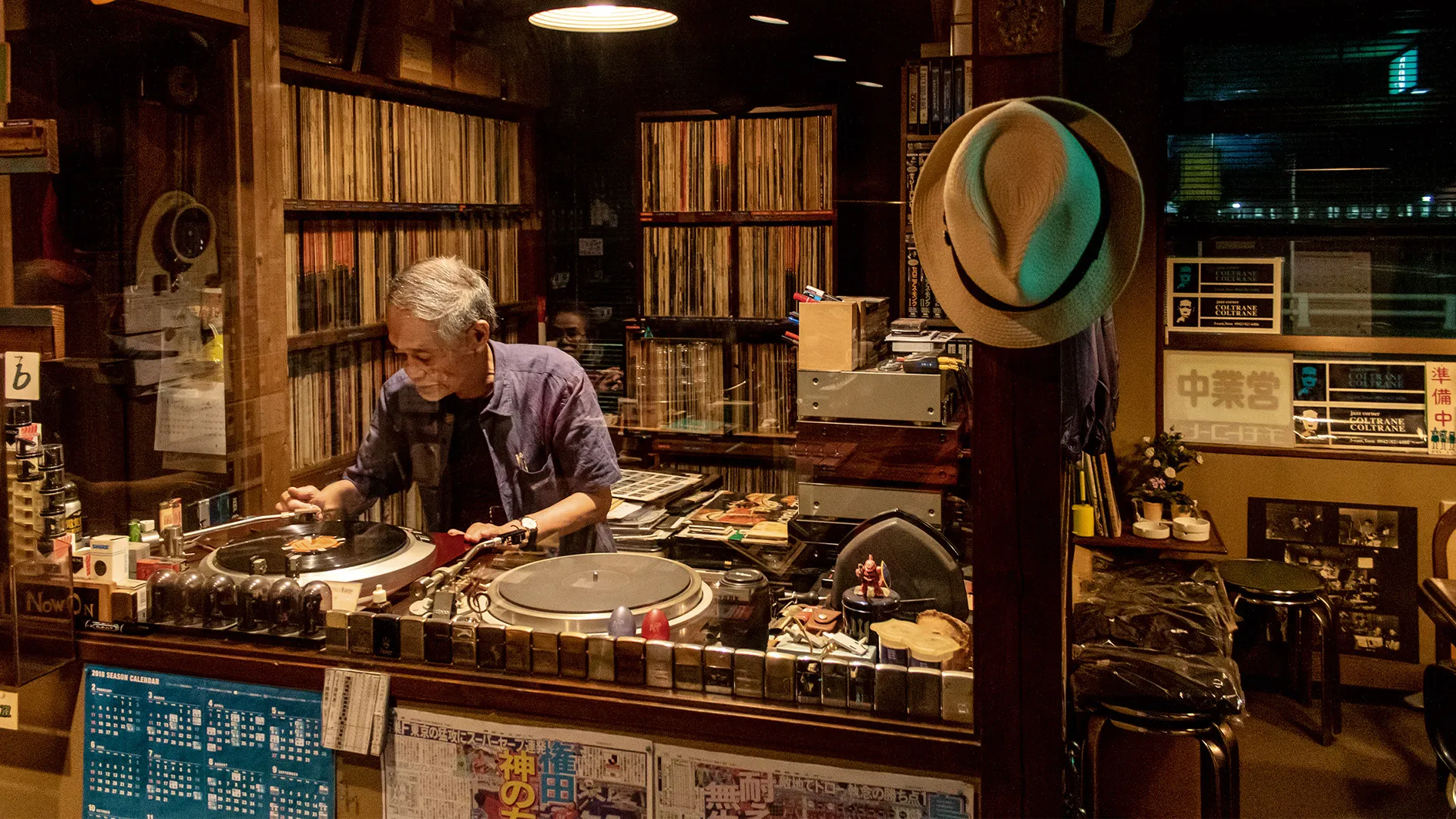 (Photography: Philip Arneill. Courtesy of Kehrer Verlag)
If you have ever walked into Kissa Kissa on Franklin Avenue in Crown Heights, you have experienced something rooted in this tradition — the dim lighting, the reverent quiet, the unmistakable warmth of vinyl played through a system built for listening, not background noise. But the story of how jazz kissas came to exist, thrived for decades in Japan, and are now finding new life in Brooklyn is a story worth telling from the beginning.
Jazz Arrives in Japan
The word “kissa” comes from kissaten — a Japanese term for a traditional tea or coffee house. In the years following World War II, a new kind of kissaten began appearing in Tokyo, Osaka, and Kyoto. Instead of tea, these establishments served coffee. Instead of silence, they served music — specifically, American jazz.
The reasons were partly economic. In postwar Japan, vinyl records were expensive imports that most people could not afford individually. A jazz kissa offered a communal solution: one owner invested in a serious sound system and a growing record collection, and patrons paid the price of a coffee to sit and listen. It was a shared library of sound.
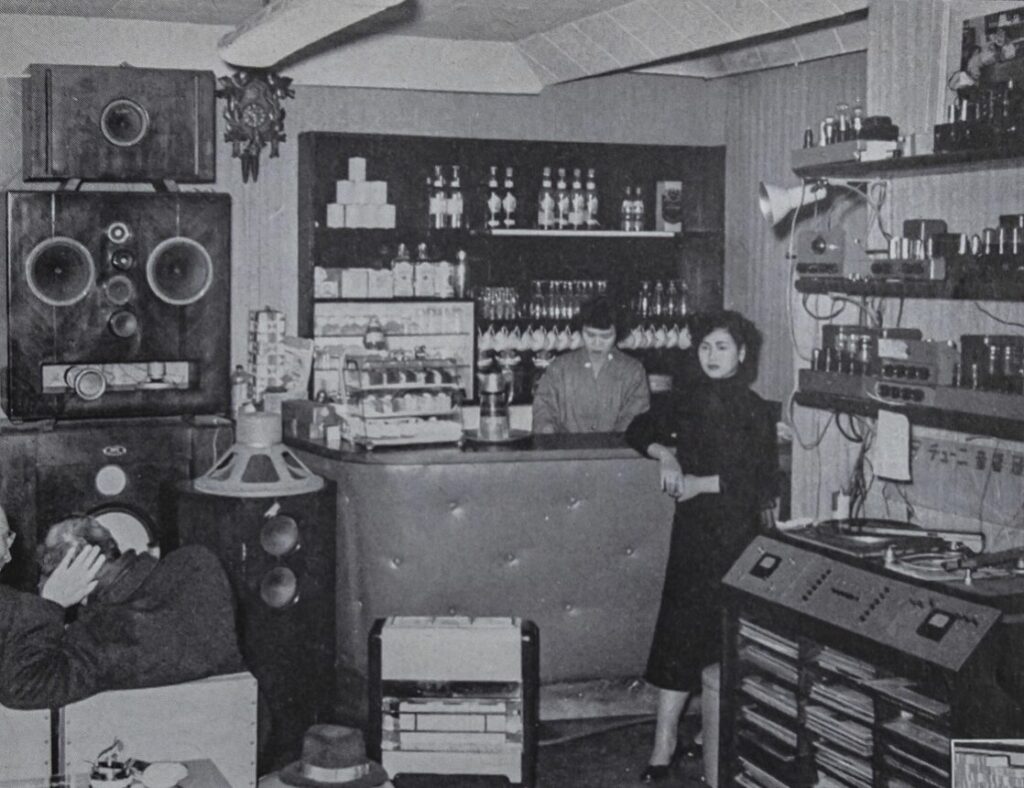
But economics alone do not explain what happened next. Something about the combination — the intimacy of the room, the quality of the equipment, the focused attention of the listeners — created an experience that felt almost sacred. Jazz kissas were not bars. They were temples of listening.
1955 to 1975
By the late 1950s, jazz kissas had exploded across Japan. At their peak, Tokyo alone had an estimated 500 to 600 of them. Each had its own character, its own collection, its own master — the owner who curated the music and controlled the turntable like a conductor leading an orchestra.
The Rules of the Room
The rules were simple and widely understood. You did not talk loudly. You did not request songs — the master chose the program. You did not treat the music as background. You came to listen, really listen, and the room was designed to reward that attention. Heavy speakers, tube amplifiers, acoustic treatments, and careful furniture placement all served a single purpose: putting you inside the music.
The Records
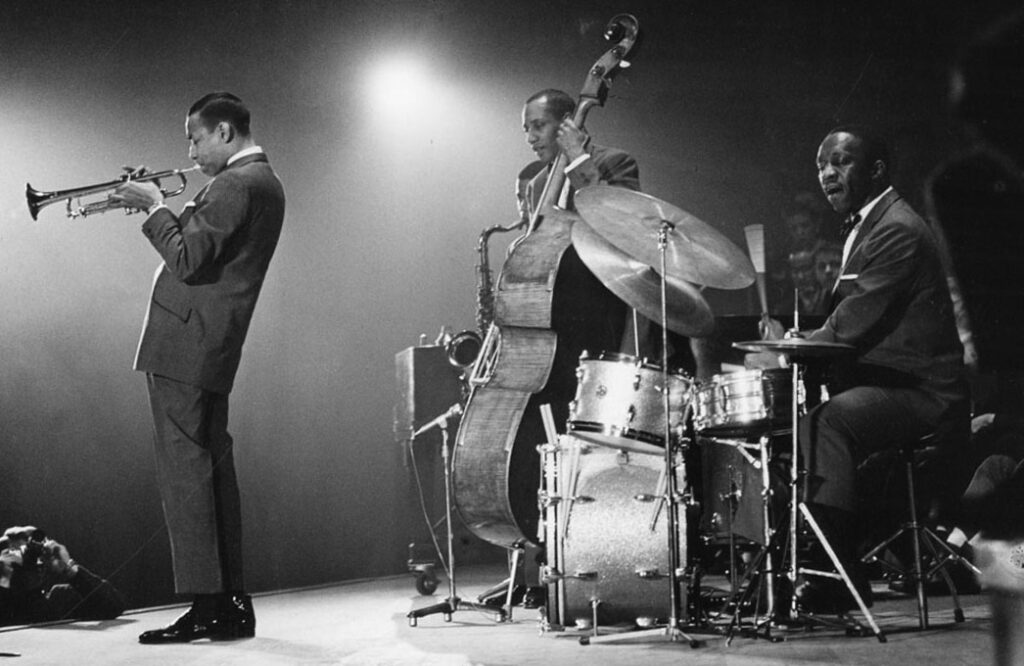
The records played in these rooms were predominantly American jazz — Blue Note, Prestige, Riverside, Impulse!, Pacific Jazz, Contemporary. Many of the Japanese pressings from this era are now among the most sought-after vinyl in the world, prized by collectors for their exceptional quality. Japanese pressing plants took extraordinary care with the manufacturing process, often producing records that sound better than their American counterparts.
Why Silence Matters
To a first-time visitor, the quiet inside a jazz kissa can feel almost startling. We are accustomed to bars where music competes with conversation, where volume is a function of how many people are trying to talk over each other. A jazz kissa inverts this entirely. The music is not accompaniment. It is the reason you are there.
This philosophy of attentive listening has roots in Japanese aesthetics — the same cultural impulse behind the tea ceremony, ikebana, and the concept of ma (the meaningful use of negative space). In a jazz kissa, the silence between the notes is as important as the notes themselves. The room is designed to honor that silence.
There is also something democratic about it. In a jazz kissa, everyone hears the same thing at the same time. There are no VIP sections, no bottle service, no hierarchy of experience. The music is the great equalizer. A college student nursing a single cup of coffee hears exactly what the wealthy collector in the corner hears.
Decline and Renaissance
The Quiet Years
By the 1980s and 1990s, the jazz kissa scene in Japan had begun to contract. Younger generations gravitated toward different music. CDs replaced vinyl in many establishments. Real estate prices in Tokyo made it harder for small, specialized bars to survive. Many legendary kissas closed their doors.
A Global Revival
But the tradition never disappeared entirely. A dedicated community of owners and listeners kept the flame alive, and in recent years, a global revival has taken hold. The rise of vinyl culture worldwide, a growing appetite for analog experiences in an increasingly digital world, and the influence of social media in spreading the aesthetic of these beautiful spaces have all contributed to a renaissance.
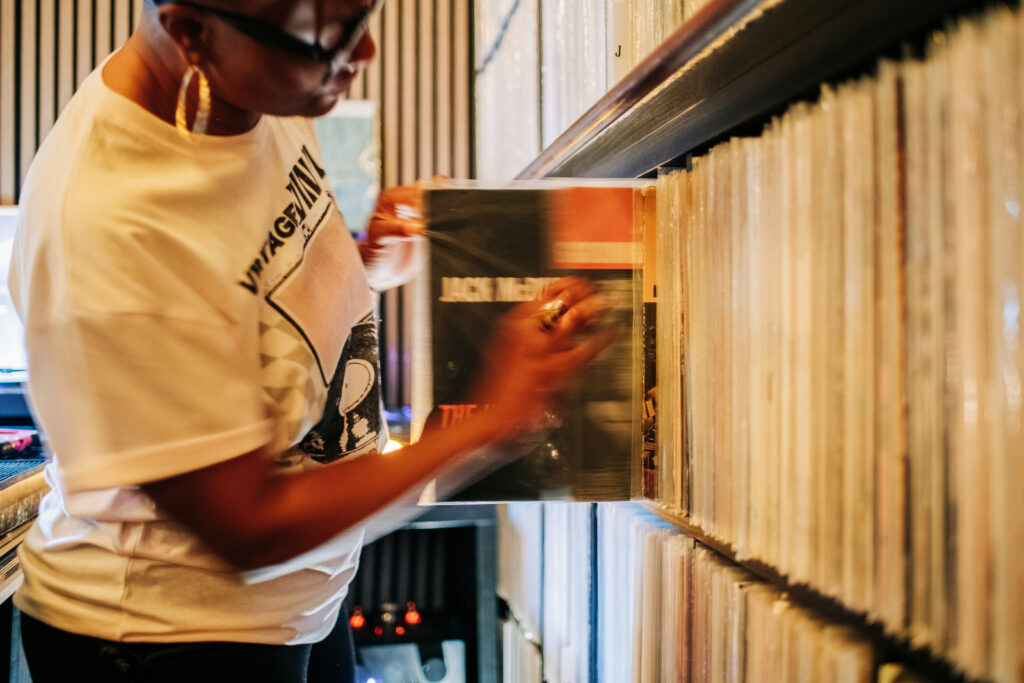
In Brooklyn, that renaissance took a specific form. Kissa Kissa opened on Franklin Avenue in February 2024 as the first traditional jazz kissa outside of Japan — a space built from the ground up to honor the original tradition. The collection of more than 5,000 LPs focuses exclusively on jazz from the 1950s, ’60s, and ’70s. The custom-engineered sound system was designed specifically for the room. The atmosphere is warm, intimate, and unapologetically devoted to the music.
A Jazz Kissa in Brooklyn
You do not need to fly to Tokyo to understand what a jazz kissa feels like. At Kissa Kissa, the experience begins the moment you step inside — the warm glow of low lighting, the soft crackle of a needle finding its groove, the immediate sense that this room was made for a different kind of attention.
The cocktail menu is crafted to complement the listening experience, not compete with it. The seats are arranged so every position in the room gets the full benefit of the sound system. And the records — spanning the golden age of jazz across dozens of labels and hundreds of artists — are selected with the same curatorial devotion that defined the great kissas of Shinjuku and Shimokitazawa.
Whether you are a lifelong jazz lover or someone who has never sat down with a full album, a jazz kissa offers something increasingly rare: a space where time slows down, the outside world recedes, and the only thing that matters is what is coming through the speakers.
667 Franklin Avenue · Crown Heights, Brooklyn
Open seven nights a week